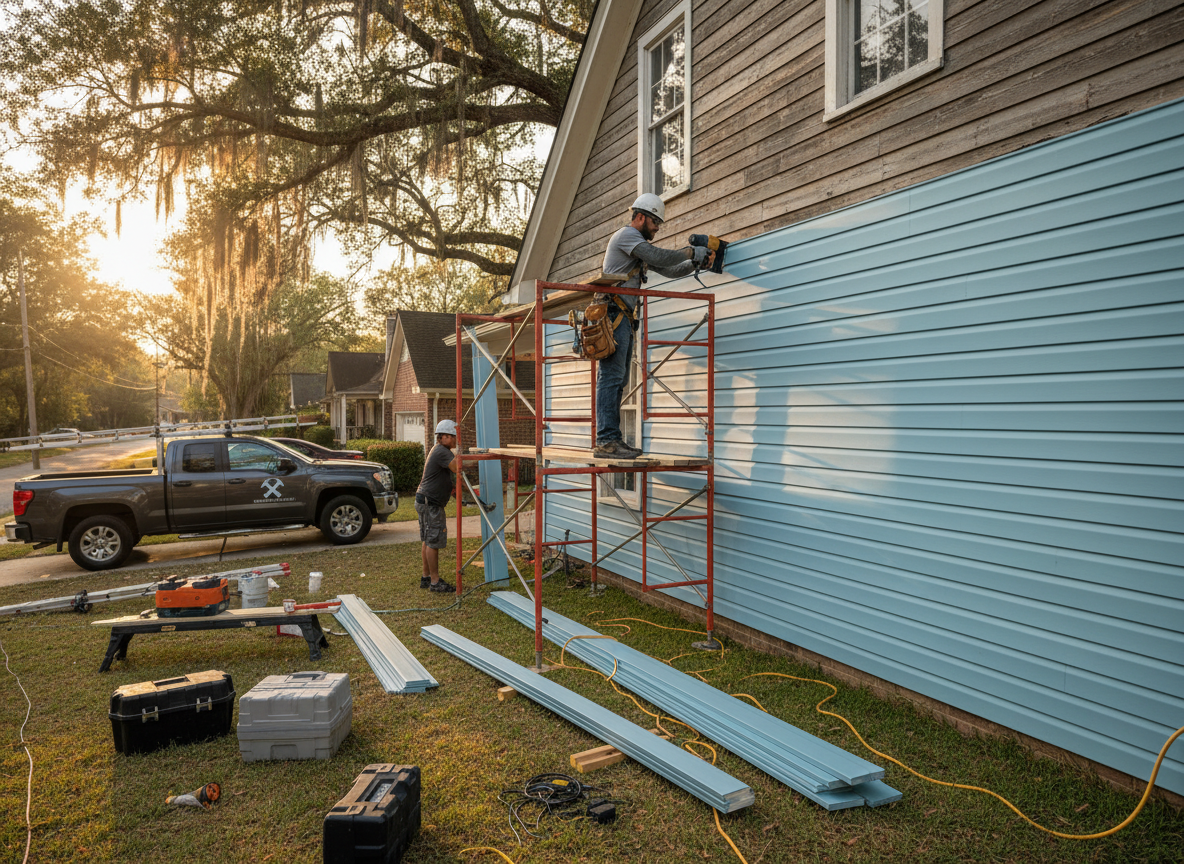
Montgomery homes often feature wood-frame construction from the mid-20th century onward, with many properties in neighborhoods like Montgomery and nearby spots in Hamilton County showing wear on original wood or early aluminum siding. Ohio winters bring freeze-thaw cycles that push moisture behind panels, leading to rot in sheathing if flashing and housewrap are not detailed correctly at every seam and penetration. Crews here routinely remove failed layers down to the studs, check for hidden damage around windows, and reinstall with proper drainage planes suited to the region's humidity swings.
Vinyl remains common for its cost and speed on ranch and two-story homes, but fiber cement boards hold up better against hail and wind-driven rain common in spring storms. Edge cases include tight property lines in established Montgomery blocks where scaffolding access is limited, requiring hand-carrying materials and careful protection of established landscaping. Code updates in the area now emphasize improved attachment schedules for high-wind zones, so older installations frequently need full re-nailing rather than simple overlay work.
Homeowners sometimes attempt partial repairs after storm damage only to find color and texture mismatches that become obvious once the sun hits the wall. Full elevation replacement avoids this while allowing insulation upgrades behind the new siding. Soil movement around foundations in the county can shift corner posts over decades, so crews check plumb before starting and adjust starter strips accordingly to prevent future gaps.
Proper ventilation behind the siding layer matters in Montgomery summers when trapped heat can warp certain materials. We inspect attic and crawl space venting during every job to ensure the new exterior does not create moisture problems inside the walls.
Technician insight
In Montgomery, the thing that catches most people out with exterior siding contractors is how older homes in the county settle unevenly, so corners and long runs go out of plumb and force extra shimming or custom cuts that add time on the job.
Siding Upgrade on Settled Ranch
Homeowner called after noticing gaps at the corners and water stains inside near the foundation. We found the original wood siding had pulled away due to foundation movement common on the area's clay soils. After removing the damaged sections we shimmed the framing true, added new flashing at the base, and installed fiber cement panels with proper clearance. The walls now shed water cleanly and the trim lines match across the full elevation.
How it works
- 1
Site Assessment
Walk the full exterior, note existing material condition, measure elevations, and check for water intrusion signs around windows and doors in Montgomery homes.
- 2
Material Selection
Review options like vinyl, fiber cement, or engineered wood against the home's age, exposure, and owner goals while confirming local availability.
- 3
Preparation and Removal
Protect landscaping and driveways, remove old siding, inspect and repair sheathing, then install updated weather barriers and flashing.
- 4
Installation
Hang new siding with correct overlaps, expansion gaps, and fastening patterns suited to Ohio temperature swings, followed by trim and caulking at all joints.
- 5
Final Walkthrough
Review every elevation with the homeowner, demonstrate maintenance points, and address any punch-list items before leaving the site.
Pricing
Cost depends on material choice, home size, and extent of underlying repairs; upfront quotes provided after assessment.