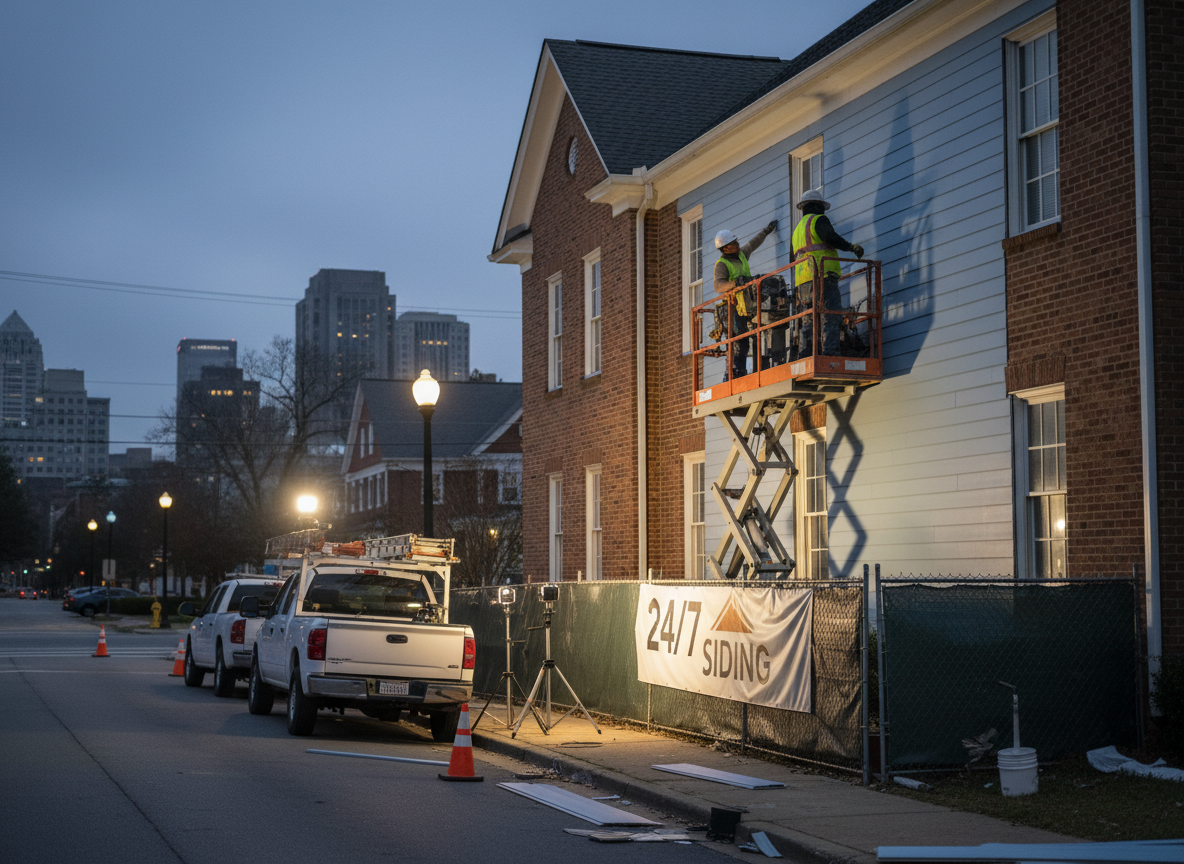
Montgomery homes built before the 1970s often feature original wood or aluminum siding that has endured decades of humidity and occasional high winds. When damage occurs at night or on weekends, waiting until normal business hours lets water work its way behind the layers and into sheathing. A 24/7 siding contractor arrives with tarps, temporary barriers, and the ability to match existing profiles so the home stays protected until permanent work can finish.
Common edge cases include corner posts pulling away on older ranch-style houses in Cloverdale and Capitol Heights, or vinyl panels cracking after repeated expansion in summer heat. Crews carry multiple profiles and colors on the truck because local suppliers close early. Matching the original nailing pattern and house wrap seam locations prevents future leaks that inspectors flag during resale.
Code requirements in Montgomery County call for proper flashing at roof-wall intersections and weep holes on any new masonry veneer. Skipping these details during an after-hours patch leads to moisture problems that surface years later. The work always includes pulling back adjacent courses to check for rot rather than simply covering the visible area.
Seasonal Considerations
Heavy spring rains followed by rapid temperature swings stress seams on south-facing walls first. Checking attic ventilation and confirming existing insulation remains dry keeps the job from turning into a larger moisture remediation project.
Technician insight
In Montgomery, the thing that catches most people out with 24/7 siding contractor is how the older wood-frame homes around the Capitol Heights and Oak Park neighborhoods trap moisture behind layers of paint and original siding once a single panel lets water in during a sudden downpour.
Nighttime Wind Damage
A section of siding lifted during overnight winds on a 1960s home near Cloverdale. Inspection revealed water already reaching the sheathing along the east wall. Crew installed temporary barriers, removed the compromised area, replaced the wrap and two sheets of plywood, then reinstalled matching panels before the next rain moved in.
How it works
- 1
Initial Call and Dispatch
Answer within minutes, gather details on visible damage and location, then send a crew from the Montgomery base.
- 2
On-Site Assessment
Inspect affected sections, check for hidden moisture behind the siding, and document conditions with photos.
- 3
Temporary Protection
Install tarps or temporary barriers to prevent further water intrusion while permanent materials are prepared.
- 4
Repair or Replacement
Remove damaged sections, replace compromised sheathing if needed, and install new siding to match existing profile.
- 5
Final Walk-Through
Review completed work with the homeowner and confirm all affected areas are sealed and weather-tight.
Pricing
Upfront quotes issued after inspection; final cost depends on material type, extent of hidden damage, and whether sheathing replacement is required.