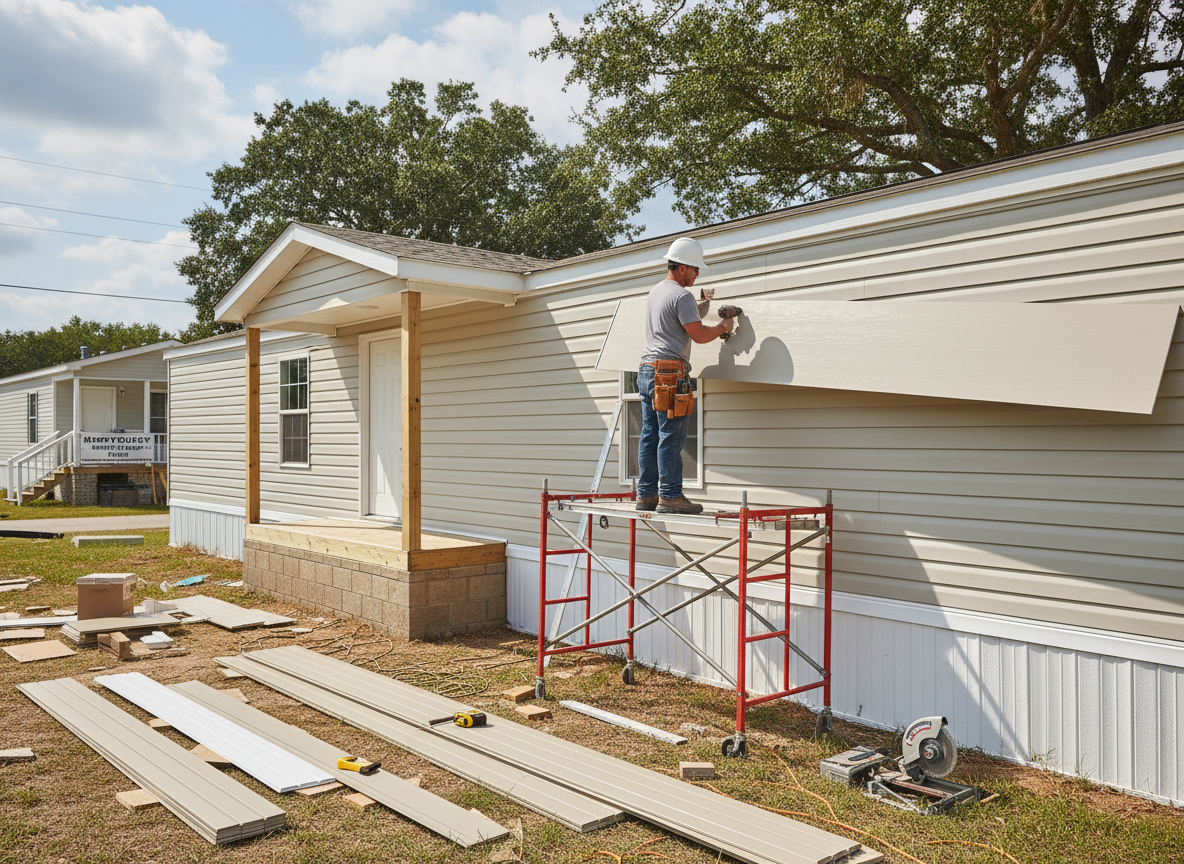
Mobile home siding in the Montgomery area demands attention to the lightweight framing and frequent use of vinyl or aluminum panels on older units. These homes often sit on piers with exposed underbellies, so installers must integrate proper skirting that allows ventilation while blocking moisture and pests common along the county's flatter terrain. Edge cases include wind-driven rain that forces water behind seams and older skirting that fails at the base where soil contact occurs. Voltiva Systems evaluates the existing sheathing for rot before any new panels go up, because skipping this step leads to callbacks when humidity cycles accelerate decay.
Code compliance matters on mobile homes because many fall under HUD standards rather than standard residential codes. Replacement siding must maintain the original wind-load ratings, especially on units placed in open lots around Montgomery where gusts hit harder than in sheltered subdivisions. Homeowners sometimes attempt to upgrade to fiber cement without checking the added weight on the frame, which can shift the home on its blocks over time. Proper fastening schedules and expansion gaps prevent buckling when temperatures swing, a detail that shows up in long-term performance more than initial appearance.
Terrain around Montgomery often means poor drainage near mobile home pads, so siding work includes checking that new materials do not trap water against the lower walls. Aluminum trim is frequently chosen over vinyl here because it holds up better to occasional standing water after heavy rains. The job always starts with a full perimeter inspection for soft spots and missing fasteners before any demolition begins.
Technician insight
In Montgomery, the thing that catches most people out with mobile home siding is the pier-and-beam setup combined with clay-heavy soil that holds water against the lower walls. Homeowners often skip checking the skirting base, so new siding fails at the bottom within a couple seasons when moisture creeps up from the ground.
Skirting and Lower Wall Replacement on Pine Level Road
Water had pooled against the south side after repeated rains, softening the bottom panels and rotting the sheathing on a 1990s mobile home. Inspection showed the original skirting had collapsed in two sections and allowed rodents inside. We replaced the damaged siding, installed new ventilated skirting with a gravel trench for drainage, and sealed all new seams. The owner reported no further moisture issues after the next heavy rain.
How it works
- 1
Site Assessment
Walk the full perimeter, check skirting condition, note drainage issues, and test for soft sheathing on the mobile home.
- 2
Material Selection
Match siding type to the unit's wind rating and discuss vinyl, aluminum, or insulated options based on exposure.
- 3
Preparation and Removal
Remove damaged panels, repair any rotted sections, and install new housewrap or flashing where needed.
- 4
Installation and Finishing
Apply new siding with correct fasteners and gaps, reinstall skirting, and verify all seams are sealed.
Pricing
Upfront quotes provided after on-site inspection; cost varies with material choice and extent of underlying repairs.