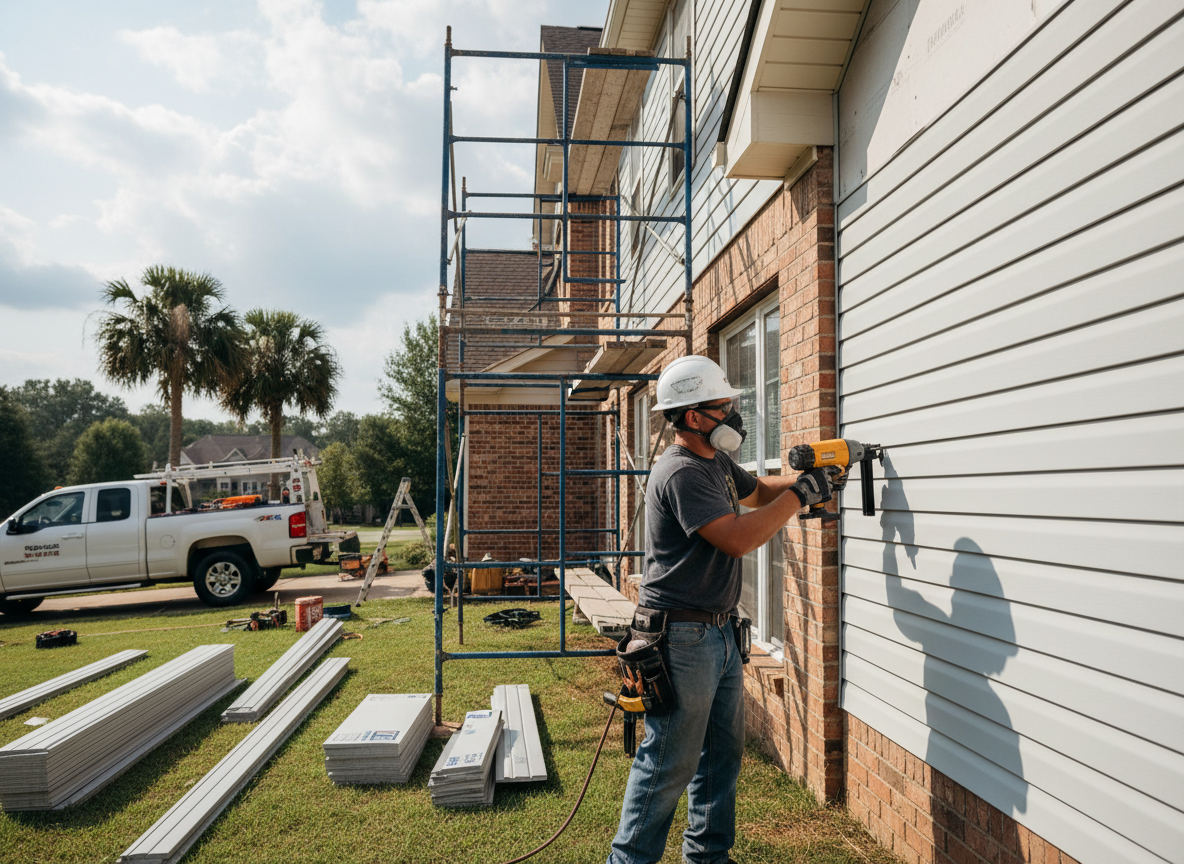
Vinyl siding in Montgomery, Ohio must handle freeze-thaw cycles and summer humidity that push moisture behind panels on homes built from the 1960s onward. Proper nailing, housewrap overlap, and weep holes prevent the buckling and rot that appear first at gable ends and around windows. Installers check for original sheathing condition because many Montgomery properties still have the original fiberboard that softens when water gets past failed caulk lines.
Edge cases include two-story homes on sloped lots where runoff concentrates at the foundation; here installers add extra starter strip and furring to keep the bottom course clear of splash-back. Ohio residential code requires ventilation behind insulated vinyl on walls exceeding certain R-values, so crews verify existing soffit and ridge vents before closing up the job. Skipping this step leads to trapped heat that warps panels within two seasons.
Homeowners often overlook the difference between standard and insulated vinyl when replacing siding on north-facing walls that see less sun but more wind-driven rain. The thicker profile resists denting from hail common in Hamilton County storms. Crews also remove old aluminum or wood trim rather than covering it, eliminating hidden decay points that later telegraph through new vinyl.
Technician insight
In Montgomery, the thing that catches most people out with vinyl siding contractors is how many 1970s and 1980s split-levels still have the original felt paper that has turned to dust, so any new siding job immediately becomes a sheathing repair once the old layer comes off.
North Wall Replacement After Storm Damage
Heavy spring winds drove rain under loose trim on a two-story home in Montgomery. Inspection showed saturated sheathing and early rot at the corners. Crews removed the affected vinyl, replaced the compromised board, added new housewrap and furring, then reinstalled insulated panels with corrected flashing. The wall now sheds water and the homeowner avoided interior drywall repairs.
How it works
- 1
Site Assessment
Measure elevations, note existing sheathing condition, and identify moisture entry points around windows and doors.
- 2
Material Selection
Match panel thickness and color to the home's exposure while confirming ventilation requirements for Montgomery climate.
- 3
Removal and Prep
Strip old siding, replace damaged sheathing, install new housewrap, and add furring strips where needed for drainage.
- 4
Installation
Hang panels with correct nail placement, maintain expansion gaps, and seal transitions at corners and penetrations.
- 5
Final Inspection
Check for level lines, proper venting, and clean-up of all debris from the Montgomery property.
Pricing
Upfront quotes provided after on-site assessment of home condition and scope.