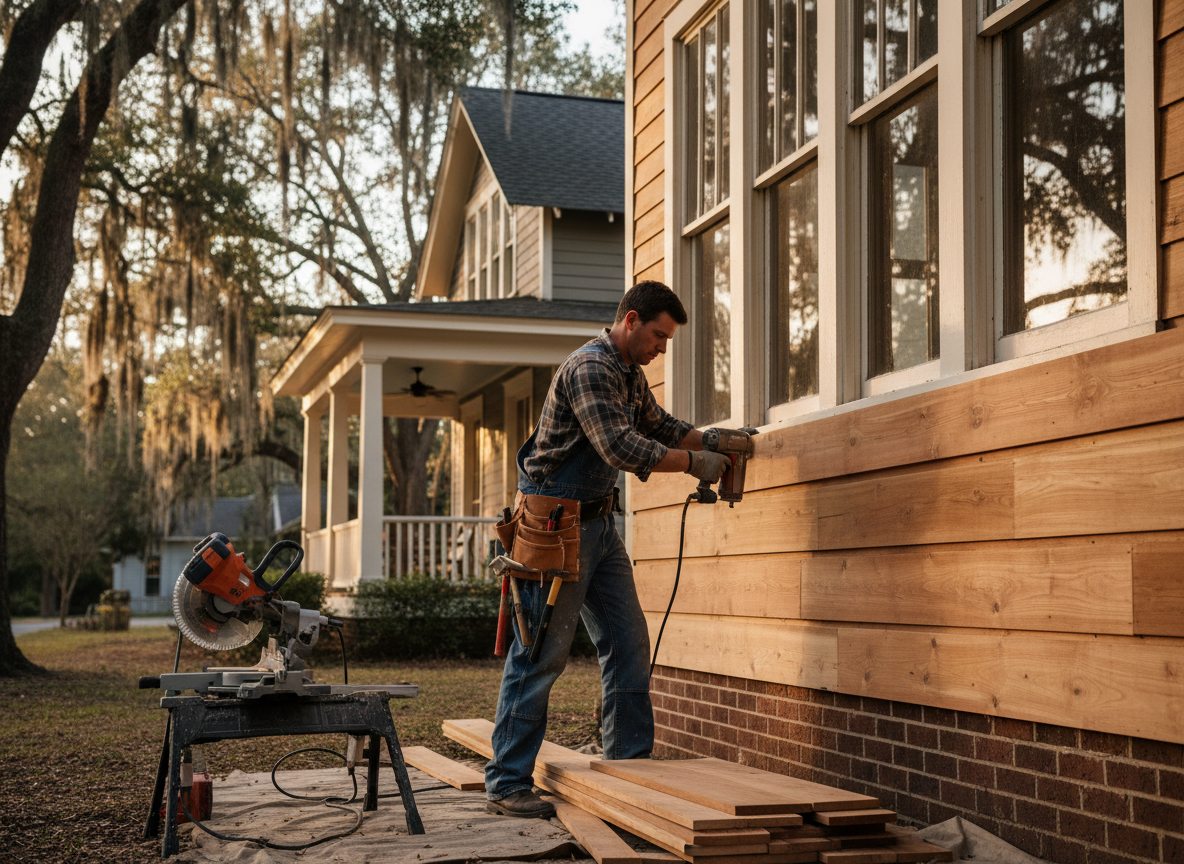
Wood siding on Montgomery homes often dates to the 1960s through 1980s stock common in Hamilton County subdivisions. These boards expand and contract with freeze-thaw cycles and summer humidity from the nearby Great Miami River valley, so proper gap spacing and back-priming prevent cupping and rot at the bottom courses. Homeowners frequently see paint failure first on south and west exposures where afternoon sun dries the surface faster than the interior.
When replacing sections, we match existing profiles such as Dutch lap or bevel siding rather than mixing modern composites that expand at different rates. Older homes in the Montgomery area often lack modern housewrap, so we install felt or synthetic underlayment behind new boards and seal all butt joints with exterior-grade caulk rated for Ohio temperature swings. Skipping this step leads to water tracking behind the siding during spring rains.
Edge cases include homes with aluminum or vinyl overlays installed over original wood; removing those layers reveals hidden damage at window and door trim that must be addressed before new wood goes up. Local building practices require maintaining ventilation at gable ends, so we never cover existing soffit vents with new siding returns.
Technician insight
In Montgomery the thing that catches most people out with wood siding is how quickly rot starts at the bottom course once the original felt paper tears; the heavy clay soils here hold moisture against the foundation longer than most homeowners realize, so we always check six inches above grade before any new boards go on.
South Elevation Repair on a 1970s Montgomery Home
The homeowner noticed peeling paint and soft spots along the first-floor siding after a wet spring. We found the original building paper had failed behind the bottom three courses, allowing water to wick into the sheathing. We replaced the damaged sections, added new flashing at the foundation line, and installed properly primed cedar boards to restore the elevation.
How it works
- 1
Site Assessment
We inspect every board, check for rot at the foundation line, and note exposure issues on south-facing walls common in Montgomery neighborhoods.
- 2
Material Selection
We recommend species such as cedar or redwood that hold paint better in Hamilton County humidity and match the profile already on the home.
- 3
Preparation and Underlayment
Damaged sheathing is replaced, new weather barrier is installed, and all trim is back-primed before boards are hung.
- 4
Installation and Finishing
Boards are fastened with stainless ring-shank nails, gaps are caulked, and two coats of exterior paint are applied once the wood acclimates.
- 5
Final Walkthrough
We review drainage at grade, confirm vent clearance, and provide maintenance guidance for seasonal checks.
Pricing
Pricing depends on square footage, extent of rot, and whether full elevation or spot repairs are needed; we provide upfront quotes after the on-site visit.