2026-10-23 ·
Preparing Vinyl Siding for Summer Heat and Humidity Near Montgomery
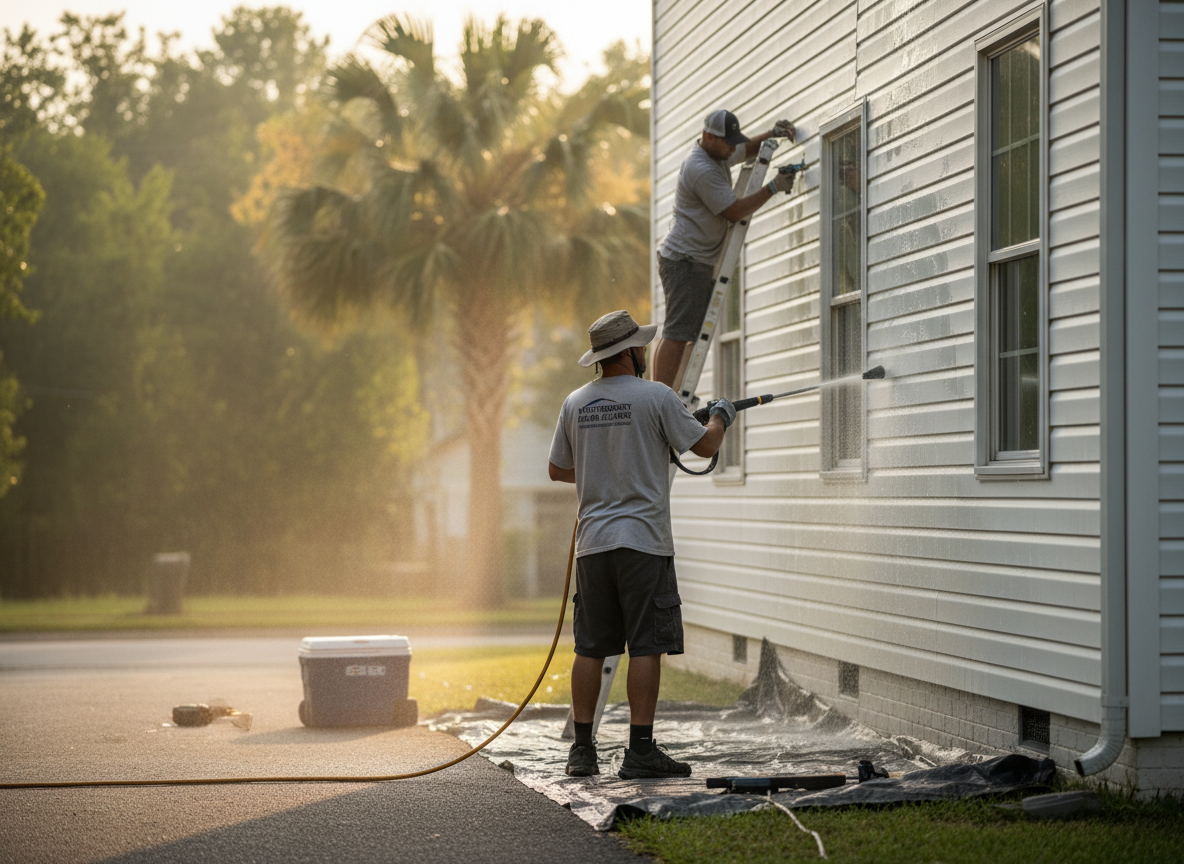
Vinyl siding on Montgomery homes requires 1/4-inch expansion gaps at joints and 1/2-inch clearance at trim edges to handle summer heat above 90°F combined with humidity levels often exceeding 70 percent. These allowances stop panels from buckling when temperatures swing 30 degrees in a single day. Homeowners in Cloverdale and Dalraida see the most movement on south- and west-facing walls that receive direct afternoon sun.
Accounting for Heat Expansion in Vinyl Panels
Vinyl siding expands roughly 1/2 inch over a 12-foot panel when temperatures rise from 50°F to 95°F. Installers leave factory-notched gaps at every butt joint and use loose nailing through slot centers so panels can slide freely. In Montgomery summers, dark-colored siding can reach surface temperatures 20–30 degrees hotter than lighter shades, increasing the risk of distortion on east- and west-facing walls. Checking that existing fasteners are not over-driven and that J-channels allow vertical movement keeps panels from telegraphing stress lines after repeated heat cycles. Properties near EastChase and McGehee Estates often show early signs of tight joints after two or three consecutive 95-plus-degree days.
Managing Humidity and Trapped Moisture
High humidity in Montgomery drives moisture behind siding when vapor cannot escape. Proper preparation includes verifying that weep holes at the bottom of each course remain clear and that housewrap overlaps direct water outward. Attic and crawl-space ventilation must move at least 1 square foot of net free area per 150 square feet of ceiling to reduce pressure that pushes humid air into wall cavities. In older neighborhoods such as Highland Park and Forest Park, original felt paper often fails to breathe, so adding vented soffit and ridge vents during prep work prevents condensation on the back of vinyl panels. vinyl siding contractors routinely inspect these details before summer arrives.
Seasonal Inspection Steps for Montgomery Homes
Walk the perimeter in early May and look for panels that have already crept within 1/8 inch of trim or each other. Remove any caulk that was applied over expansion joints and replace it with backer rod plus paintable exterior caulk only at fixed points such as window corners. Clear debris from the 1-inch gap between siding and grade at homes in Garden District and Capitol Heights where soil stays damp. Test that dryer vents and bath fans exhaust at least 3 feet away from siding to avoid adding extra moisture. These checks take under two hours yet prevent the majority of summer callbacks.
When to Schedule Professional Review
If panels show waviness after the first heat wave or if nails have pulled 1/8 inch or more, contact a local crew before July. Early correction avoids full-panel replacement later. Homeowners in Pike Road and Waugh who maintain these details report siding lasting 25–30 years instead of the 15–20 years seen on neglected homes. How Montgomery Homeowners Can Spot Wood Rot in Older Siding outlines additional checks that pair with vinyl prep work. What Affects Siding Replacement Costs in Montgomery Ohio explains how proactive maintenance reduces future expenses.